
Why “Unverified” Should Stay Visible in a Real Estate Timeline

There is a dangerous kind of neatness in transaction software: everything looks final even when the underlying evidence is not.
If somebody changes a deadline but the supporting addendum or source document has not been linked, the interface should not quietly make that uncertainty disappear.

Unverified is a useful state
The REKLOZE product design calls for unsupported deadline changes to remain visibly unverified or pending review until supporting documentation is supplied or connected. That is not a legal conclusion about whether a change is valid. It is a workflow signal that the evidence is incomplete.
That distinction matters because a professional should be able to tell the difference between a date backed by a source document and a date that still needs confirmation.
Why hiding uncertainty is worse
A clean-looking date can be mistaken for a verified date.
The next person reviewing the file may not know what evidence is missing.
A handoff becomes harder when the history of the change disappears.
Human review becomes less useful when the system presents every state with the same level of confidence.
The larger REKLOZE idea
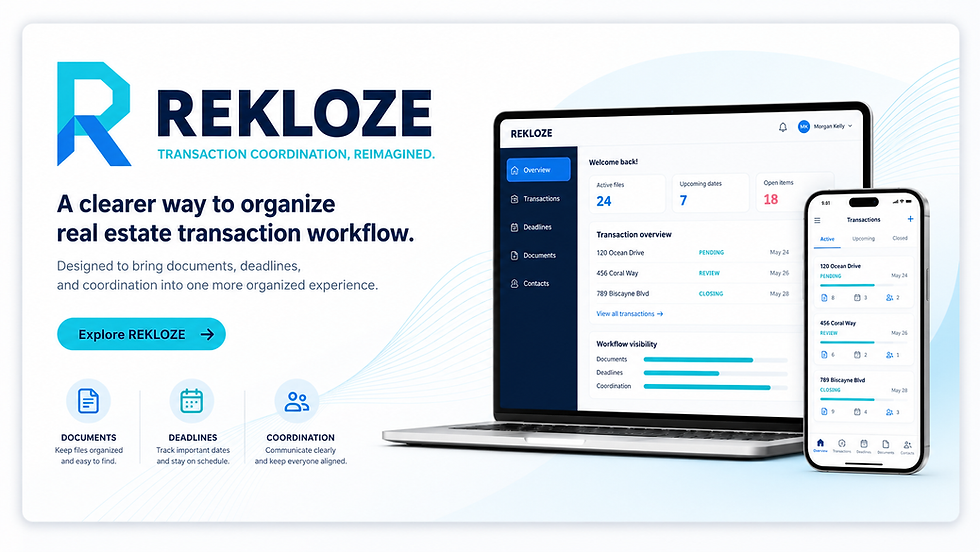
REKLOZE is being built around explainable deadline intelligence: the date, the source, the change history, the supporting evidence, and what still needs review. The goal is not to replace professional judgment. It is to make that judgment easier to apply with the right context visible.
REKLOZE is in development. Product concepts shown or described may represent planned or in-progress functionality and should not be treated as proof of current release behavior.




Comments